
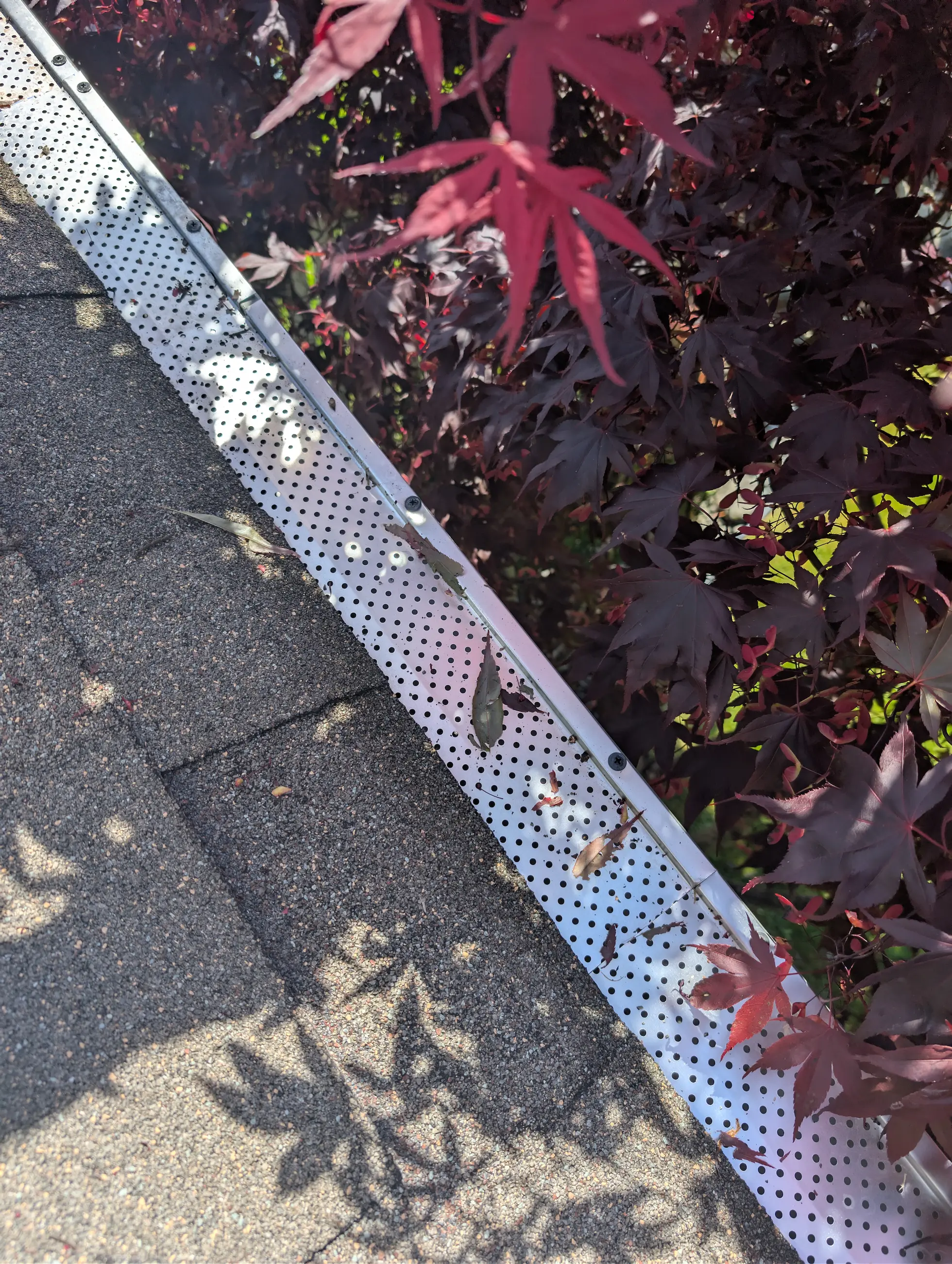
The appeal of gutter guards is easy to understand. Fewer trips up a ladder, fewer service calls through the rainy season, and the peace of mind that comes from knowing your gutters are managing themselves. For a lot of Victoria homeowners, that's exactly what they get.
Still, the honest version of that pitch is "low-maintenance," not "no-maintenance." The distinction matters, especially here, where the conditions year-round are more demanding than most guard reviews account for. Getting your expectations right before buying is what this post is about.
For the full picture on gutter maintenance in Greater Victoria - seasonal debris patterns, water damage risks, and cleaning schedules by property type - see our complete guide to gutter maintenance for Victoria BC homeowners. This post focuses specifically on the gutter guard question: whether that investment belongs in your home's maintenance plan.
Key Takeaways
Here's what Victoria homeowners need to know before buying gutter guards:
- For homes with significant conifer coverage, gutter guards can realistically cut cleaning visits from 2-3 per year to one light annual inspection.
- A 2025 This Old House survey of 1,000 gutter guard owners found 41% still clean at least once a year. Gutter guards reduce maintenance, they don't end it.
- One annual service visit is the realistic expectation for most guarded homes in Victoria - ideally before November, after the majority of debris has fallen and before the heavy rains begin.
- Professional-grade perforated aluminum gutter guards handle Victoria's heavy rainfall well. Foam and brush inserts become moss incubators in Victoria's wet climate within one to two seasons.
- The investment typically pays for itself in 3-5 years for homes on a 2-3 clean-per-year schedule, at current Victoria cleaning rates.
So, Are Gutter Guards Worth It?
In short: for homes with significant Douglas fir, cedar, or cottonwood coverage, gutter guards are worth installing. The realistic outcome is cutting your professional cleaning visits from 2-3 per year down to one annual service. That's a meaningful reduction in both cost and hassle over time, and it compounds across the life of the installation.
That said, two things don't work: cheap hardware-store snap-on screens, and the expensive door-to-door branded systems. Snap-on screens flex under debris load, and needles catch on the screen edges and compact underneath, making your next cleaning harder than if you'd had nothing installed. The expensive national chains charge $40 or more per linear foot for a product that real-world testing shows rivals a professional installation in actual performance, at a fraction of that cost.
By contrast, for properties with minimal tree coverage (one or two small deciduous trees, or a largely open yard) that already manage fine with one cleaning per year, guards are harder to justify on the numbers. The payback period doesn't close within a reasonable horizon at that cleaning frequency.
Why Do Victoria's Conditions Matter for Gutter Guards?
Most gutter guard reviews are written for markets where the main challenge is autumn leaf fall - a few weeks each year, then it's done. Victoria is different in three specific ways, and those differences change what "low-maintenance" actually looks like in practice.
Year-Round Conifer Needle Drop
Douglas fir, western red cedar, and arbutus shed needles through all four seasons. Douglas fir is the dominant conifer across Greater Victoria and sheds year-round, unlike deciduous trees that drop leaves over a few weeks in autumn. There's no clean window where the debris stops. The goal with guards isn't to stop the needles entirely - it's to manage accumulation down to one annual service rather than two or three service visits a year.
Cottonwood Fluff in Late May and June
Black cottonwood releases fluffy white seed material each spring during the driest stretch of the year. With no rain to rinse guard surfaces, this material can sit and collect. Even so, it's manageable: a surface inspection and quick brush-off in late June addresses it - but it's one maintenance window that persists regardless of what type of guard you have.
Three Consecutive Heavy Rain Months
Victoria receives about 129mm in November, 87mm in December, and 111mm in January, according to Environment and Climate Change Canada's 1991–2020 Climate Normals for the Victoria Gonzales station. As a result, any organic matter left unaddressed in October runs straight into that three-month stretch. Guards need to move water efficiently at those volumes; not all types can.
Source: Environment Canada Climate Normals 1991-2020, Victoria Gonzales station
Which Gutter Guard Types Actually Work in Victoria?
Not all guards are suited to Victoria's conditions; in practice, the gap between types is wider here than in most markets. Some are a genuine long-term investment. Others create more problems than they solve, particularly once coastal moisture and year-round needle drop are factored in.
What Works: Professional-Grade Perforated Aluminum
This is what Two Pines installs as part of our gutter guard installation service. The key characteristics that make it work in this market are frame rigidity, hole density, and flow capacity. A rigid aluminum frame means the guard doesn't flex under debris load, so needles and organic matter shed rather than settling in low spots.
Tight hole spacing lets water through while limiting what makes it into the gutter channel. Quality products in this category are rated to handle significantly higher rainfall volumes than what Victoria sees in even its worst months - flow capacity matters when three inches of rain falls in a day.
The contrast with cheap snap-on screens is straightforward: those flex, the edges create catch points for debris, and the result is compacted material that's harder to clear than loose debris in an unguarded gutter. Professional installation of a quality product is what produces the maintenance reduction people expect when they buy guards.
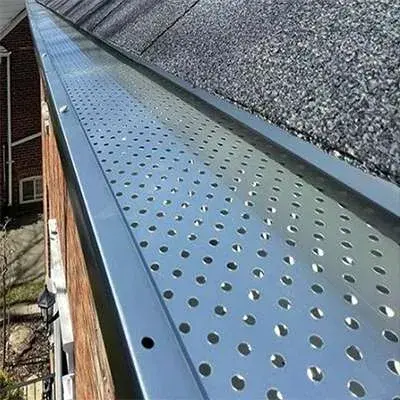
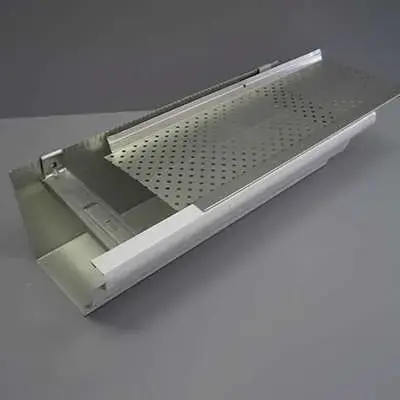
Beyond product selection, full coverage matters. If there are any gaps or open access points in the installation - a missed section at a valley, an uncovered end cap, a joint that's worked loose - organic matter will find those spots and settle there. One gap can undermine an otherwise low-maintenance system. A proper install covers every run completely and checks for access points at completion.
Which Guard Types Should Victoria Homeowners Avoid?
Three types consistently underperform in Victoria's conditions. Two are sold aggressively at hardware stores or door-to-door; a third is frequently recommended online despite being a poor fit for wet coastal climates. Here's what goes wrong with each, and why it matters here specifically.
Reverse-Curve Guards
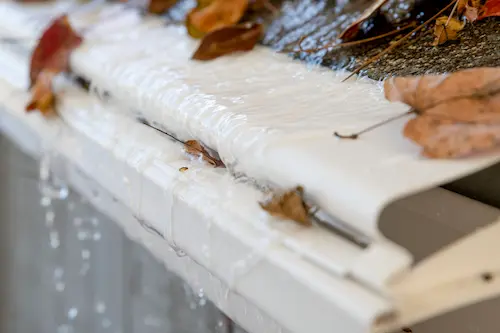
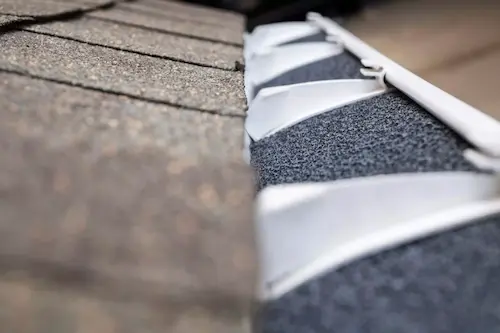
In theory, these work via surface tension: water clings to a curved surface and rolls into the gutter while debris falls off the leading edge. In moderate rainfall, this can function reasonably well. In Victoria's heavy winter rain events, however, the flow exceeds what surface tension can handle, and water overshoots the gutter entirely, running down the exterior wall instead of through the downspout.
This failure mode is called hydraulic jump in fluid dynamics: the point at which flow velocity overcomes surface adhesion and the water sheet detaches from the guard surface entirely. Roof valleys concentrate runoff from a large catchment area before it reaches the gutters, making them the highest-flow points on the roof. Consequently, reverse-curve guards fail precisely where and when functional gutters matter most. That's the wrong failure mode. We don't recommend them for this market.
Foam Inserts
Unlike rigid aluminum, foam inserts fill the gutter trough with porous polyurethane. In dry climates, buildup sits on top and water seeps through. In Greater Victoria's persistent coastal moisture, however, the foam becomes a moss and mould incubator within one to two seasons. Once organic matter embeds in the pores, it can't be rinsed out: the insert needs full replacement. In our experience across Greater Victoria installations, that replacement cycle runs every 2-5 years in BC's coastal climate. That's a net loss compared to regular cleaning.
Brush Inserts
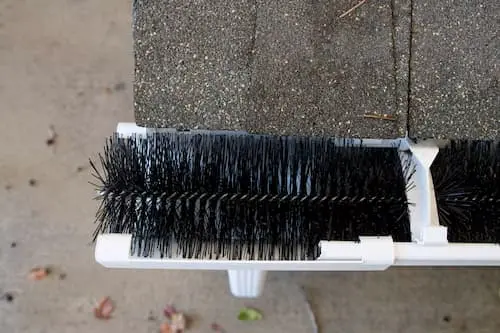
Brush inserts share the same moisture problem as foam, but with worse debris retention. Douglas fir needles weave into the bristles and can't be removed by rinsing; pulling the entire insert is the only option. For properties with conifer coverage, consequently, brush guards reliably turn a routine annual cleaning into a full removal and reinstall.
| Guard Type | Conifer Performance | Moisture / Moss Risk | Victoria Verdict |
|---|---|---|---|
| Perforated aluminum (professional grade) | Handles well with tight spacing and rigid frame | Low. Hard surface sheds moisture. | Recommended |
| Reverse-curve (helmet) | Moderate in light rain; overshoots gutters at high flow | Low, but fails at roof valleys in Nov-Jan storms | Not recommended |
| Foam inserts | Poor. Debris embeds in pores, can't be rinsed. | High. Moss incubator within 1-2 seasons. | Avoid |
| Brush inserts | Poor. Needles weave into bristles permanently. | High. Same moisture trap as foam. | Avoid |
| DIY snap-on screens | Poor. Flex under load, debris catches on edges. | Low, but increases cleaning difficulty significantly | Not recommended |
What Does "Low-Maintenance" With Gutter Guards Actually Mean?
A 2025 This Old House survey of 1,000 homeowners with guards installed found that 41% still clean their gutters at least once a year after installation. That's a useful number to hold onto. It doesn't mean guards don't work - it means the honest outcome is fewer cleanings, not none.
In practice, one annual service visit is the realistic expectation for most guarded homes in Victoria, ideally before November, after cottonwood season has passed and before the three heavy rain months arrive. That visit covers clearing any surface buildup on the guard, confirming downspout flow is unobstructed, and checking for one issue that surprises a lot of homeowners:
Shingle granule buildup. Asphalt shingles shed granules throughout their lifespan - this is normal. On guarded gutters, granules can work their way underneath and mix with organic debris to form a dense, slow-draining sludge at the gutter channel floor and at the downspout entry. It builds gradually across seasons, so it rarely looks urgent until it becomes a blockage. Your annual service visit catches and clears it before that happens.
Accordingly, one habit matters more with guards than without: don't let maintenance slide after installation. If the first year or two goes unattended, organic material and granule sludge compact and become significantly harder to clear. Staying on a consistent annual schedule from the start is what keeps the "low-maintenance" promise intact over the long term.
To summarize what actually changes: for a home on three professional cleanings per year, guards bring that down to one visit. For a home already on two visits, the reduction is meaningful but smaller. Either way, that's the accurate version of what guards deliver.
Does the Investment Make Sense?
Ultimately, for homes with significant conifer coverage on a 2-3 clean-per-year schedule, professional guards typically pay for themselves in 3-5 years. For homes that only need one cleaning a year, the math is less compelling. Here's how it breaks down using current professional gutter cleaning rates in Greater Victoria.
Without Guards
- 2 professional cleans per year at ~$300/visit = $600/year
- Over 10 years: $6,000
With Professional Guards Installed
- Installation: ~$1,500-$2,500 for an average home
- 1 light annual inspection at ~$175/year
- Over 10 years: $1,500-$2,500 (install) + $1,750 (inspections) = $3,250-$4,250
The Break-Even Calculation
As a result, break-even sits at approximately 3-5 years, depending on installation cost and how many cleaning visits are eliminated. The math works better the more frequently you were cleaning before. Three cleans per year reaches break-even faster than two. Fewer cleans, longer payback.
Pricing based on Two Pines project quotes across Greater Victoria, 2026.
For that reason, the DIY snap-on screens at $3-5 per foot aren't worth including in the break-even analysis. They don't perform in Victoria's conifer-heavy conditions: the flexible frames bend under debris load, needles mat along the screen edges, and the following service visit takes longer than it would have without any guard installed.
When Guards Make Sense
- Heavy conifer coverage - 3 or more Douglas fir or cedar trees within 10 metres of the roofline
- Planning to stay in the home 5 or more years
- Strata or rental properties where reducing service call frequency has ongoing value
- Homeowners who want to reduce ladder work on high or steeply pitched rooflines
When They Don't
- Minimal tree coverage - one cleaning per year is already sufficient
- Planning to sell within 2-3 years - break-even is unlikely in that window
- Budget constraints - a cheap snap-on guard is not a substitute for professional installation
In practice, we install guards most often in Saanich and Langford, where the conifer canopy is densest and clients are typically on 3-clean-per-year schedules before installation. Those are the properties where the payback math is clearest, and where reducing service call frequency has the most meaningful impact over the life of the installation.
Frequently Asked Questions
Are gutter guards worth it for Victoria BC homes?
For homes with significant conifer or cottonwood coverage, professionally installed guards can reduce cleaning visits from 2-3 per year to one light annual inspection. The break-even at current Victoria cleaning rates is typically 3-5 years. For homes with minimal tree coverage that only need one cleaning a year, the ROI case is weaker.
Do gutter guards work with Douglas fir and cedar needles?
Professional-grade perforated aluminum guards with tight hole spacing and a rigid frame manage Victoria's conifer debris well. The key is installation quality and hole density - loose, low-density screens let needles catch on edges and compact underneath. No guard type fully eliminates maintenance in a conifer-heavy yard, but a good install meaningfully reduces it.
Do you still need to clean gutters with gutter guards installed?
Yes. That same 2025 This Old House survey of 1,000 guard owners found 41% still clean at least once annually. For most guarded homes in Victoria, one annual service visit is the realistic expectation - ideally before November, after cottonwood season. That visit covers guard surface clearance, downspout flow, and checking for shingle granule buildup in the gutter channel, which mixes with organic material and can form a slow-draining sludge if left unaddressed.
What type of gutter guard works best for Victoria homes?
Professional-grade perforated aluminum with a rigid frame and high hole density performs well in Victoria's conditions. Foam inserts and brush inserts are not recommended - BC's year-round moisture turns them into moss incubators quickly. Reverse-curve guards are also not recommended for Victoria's heavy winter rainfall, where they can overshoot the gutter entirely.
How much do gutter guards cost in Victoria, BC?
Professional perforated aluminum installation typically runs $10-$15 per linear foot, or $1,500-$2,500 for an average home. Expensive branded systems charge $40 or more per linear foot for comparable real-world performance. DIY snap-on screens cost $3-$5 per foot but tend to worsen the next cleaning by catching debris on their edges.
Questions About Gutter Guards? We'll Give You an Honest Answer.
Fully insured. 85+ five-star reviews. Free assessments across Greater Victoria.