
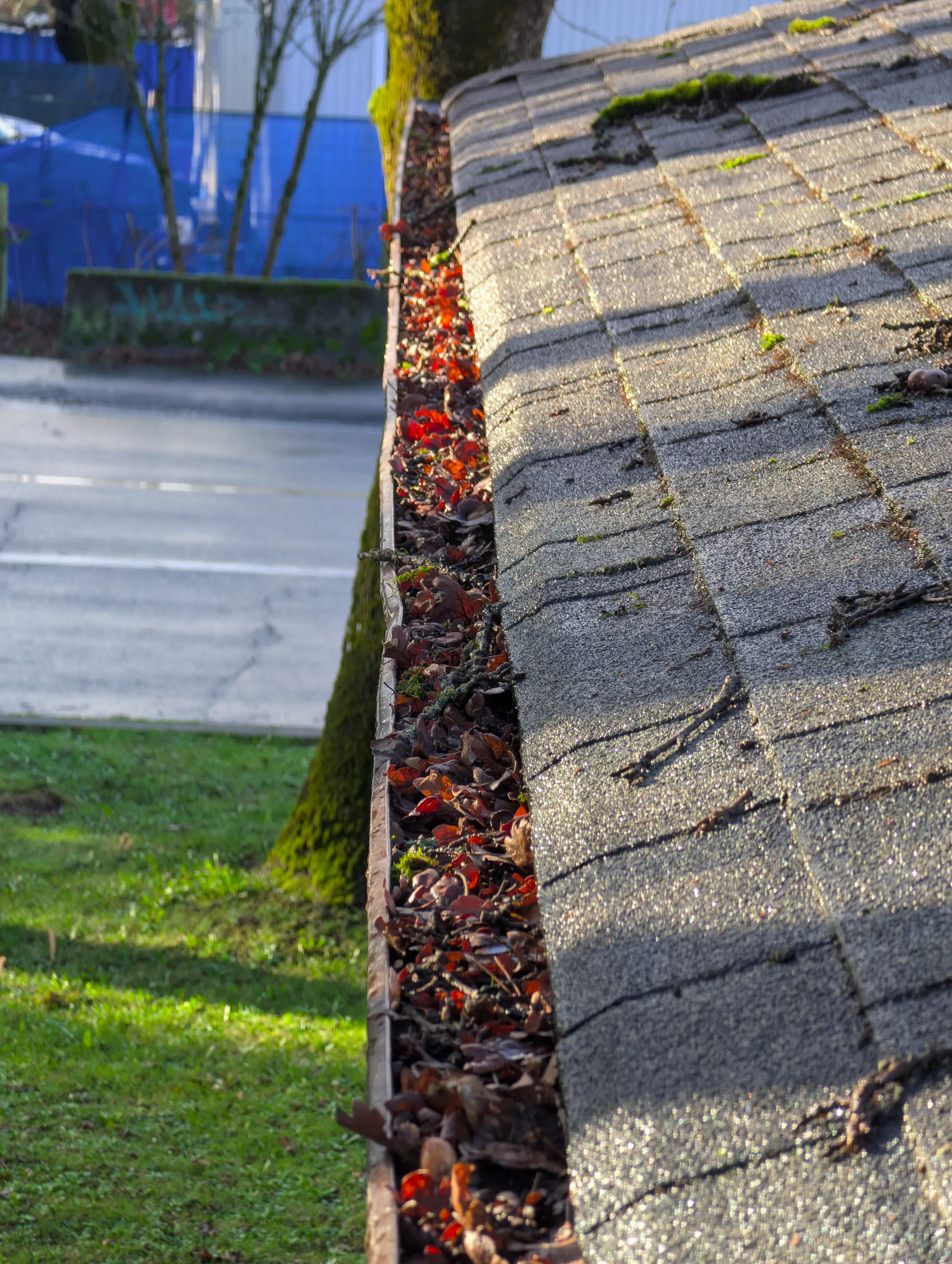
Most gutter articles give you one verdict: time to replace. But most of the time, when we're on a job in Victoria and a homeowner points to a gutter that's causing problems, what looks like a structural failure is a debris problem. Fir needles and cedar shed compact into a dense sludge. A downspout plugs. October arrives and the gutter can't move what the dry season left behind.
The signs homeowners worry about can mean three different things: the gutters need cleaning, they need a repair, or they genuinely need replacing. Which one you're dealing with changes the cost significantly. Water damage is the leading cause of personal property insurance claims in Canada, accounting for roughly 40% of all claims, according to the Insurance Bureau of Canada. Gutters are the first line of defence for your home's envelope. Knowing what the signs actually mean is worth a few minutes.
Each sign below gets a verdict: Clean, Repair, or Replace. Start there before calling anyone for a quote. For a broader look at seasonal maintenance, see our complete guide to gutter maintenance for Victoria homeowners.
Key Takeaways
Most gutter problems in Victoria fall into three categories: a debris blockage (clean), a failed hanger or seam (repair), or rotted fascia (replace). Knowing which one you're dealing with changes the cost considerably.
- Overflow during rain is usually a cleaning problem, not a structural one. Check the downspout before assuming the gutters are damaged.
- Sagging and leaking seams are usually repairable if the gutters are under 15 years old and the fascia behind them is solid.
- Soft or rotted fascia behind the gutter is the one sign that means replacement is required. The gutter must come off before the fascia can be repaired properly.
- Moss growing in gutters is a Victoria-specific problem that national guides miss. It holds moisture against the gutter and fascia, accelerating both corrosion and rot.
Sign 1: Your Gutters Overflow During Rain
Overflow is the most common sign we're called about, and in most cases it has nothing to do with the gutters themselves. In Victoria, the culprit is almost always organic debris: fir needles and cedar shed that compact over summer into a dense layer that blocks the channel and backs up the whole system. A fully clogged gutter will overflow in moderate rain, not just heavy storms.
Check the downspout before assuming anything. A single plugged downspout can back up an entire gutter run and create overflow at the midpoint, which looks like a structural problem but isn't. Flush the downspout. If the channel is clear and water still overflows, the gutter pitch may be off — a hanger issue, not a replacement issue.
For a detailed schedule of when to clean based on tree coverage and property type, see our guide to gutter cleaning frequency in Victoria.
Verdict: Clean. Book a gutter flush before the next rain.
Sign 2: Gutters Are Sagging or Pulling Away from the House
A sagging run means the gutters are no longer holding their shape or their attachment point. In most cases the gutter itself is fine. The hangers (the metal brackets screwed into the fascia) have failed, either from debris load, from the bracket holes widening over years of expansion and contraction, or from the fascia softening behind them.
One or two failed hangers along a run is a straightforward repair. If most of the run is drooping, or the fascia board feels soft when you press it firmly, the scope changes. The fascia needs to come off and be replaced before the gutters can be properly re-hung. How long before you're in that territory depends largely on what material your gutters are made from.
Source: HomeAdvisor Canada cost guides and aluminum gutter manufacturer specifications; copper lifespan per the Copper Development Association
Verdict: Repair if hangers are isolated. Replace if widespread or the fascia is compromised.
Sign 3: Visible Cracks, Holes, or Rust Spots
Small cracks and rust spots are repairable. The question is how many there are and how far along the deterioration is. One section with a pinhole can be sealed; a run with corrosion at every joint and cracks at the low points is past the point where repair makes financial sense.
In Victoria, organic sludge accelerates this. Decomposing fir needles and other debris hold moisture and create an acidic environment inside the gutter channel that corrodes aluminum and steel from the inside out. Gutters that stay packed with debris between cleanings consistently wear faster than those that are maintained regularly.
A useful cost threshold: if repair estimates exceed 50% of what replacement would cost, replacement is the better investment. Gutters past 75% of their expected lifespan with multiple failure points have a lower threshold: 30–40%. At that stage, the economics almost always favour replacement.
Verdict: Repair if isolated. Replace if widespread or near end of expected lifespan.
Sign 4: Paint Peeling or Staining on the Fascia
Staining on the board behind the gutter, or paint peeling along the fascia face, means water has been making contact with wood it shouldn't reach. There are two causes, and they have different fixes.
The first is overflow: water running behind the gutter channel and contacting the fascia repeatedly through the wet season. Clean the gutters and the staining stops. The second is a leaking seam or crack: water escaping from inside the gutter and running down the face of the fascia at a specific point. The gutter channel may look fine from the ground while a joint is dripping every time it rains.
In either case, press the fascia board firmly at the stained section. Sound wood resists. Soft wood means the moisture has been there long enough to cause rot, and you're now looking at a larger scope than just the gutter. For a full picture of what sustained overflow does to the fascia, see our post on what happens when gutters overflow in Victoria.
Verdict: Investigate first. Clean if overflow is the cause; repair or replace if a leaking seam. Check the fascia for softness before deciding.
Sign 5: Moss Growing In or On Your Gutters
This sign rarely appears in national gutter guides, but it's common in Victoria. The combination of moisture, Douglas fir and cedar canopy, and organic debris creates ideal conditions for moss to establish in the gutter channel and along the drip edge. Most homeowners notice it when the lip turns green. By then, the moss has usually been holding moisture against the metal and the fascia behind it for at least one wet season.
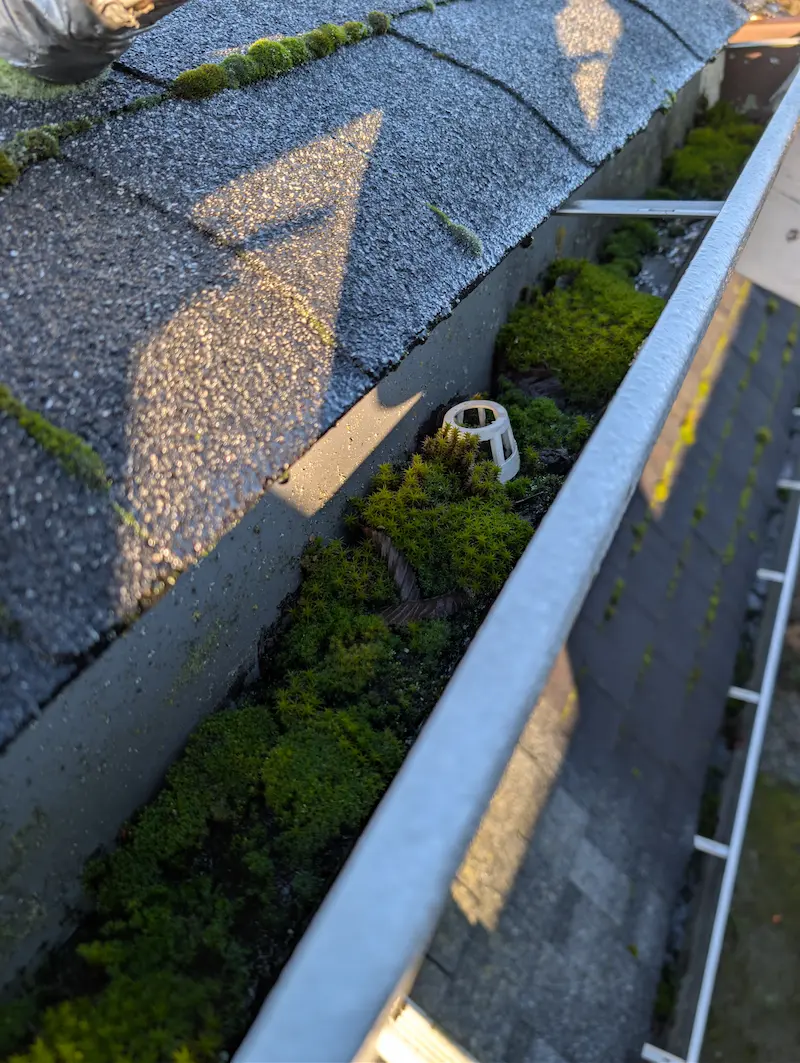
Moss in gutters doesn't just cause blockages. It holds moisture continuously, including between rains, which drives corrosion from the outside of the gutter and accelerates wood rot on the fascia. The debris underneath the moss compacts and stays wet far longer than it would otherwise.
We've pulled moss colonies out of gutter channels in Gordon Head and Cordova Bay where the Douglas fir canopy is dense and hadn't been treated in years. In several cases the debris underneath was essentially composting — and the fascia behind it had already started to soften. That combination turns what should be a cleaning job into a much more expensive repair.
The fix is a gutter clean combined with treating the roof above. Most of what's growing in the gutter originates from roof colonies spreading to the drip edge. Clean the channel; treat the roof with an eco-friendly moss treatment that kills at the root. Without addressing the roof, the gutter refills within a season. For the treatment side, see our roof moss removal service.
Verdict: Clean and treat the roof. If the fascia behind the moss is soft, see Sign 7.
Sign 6: Leaking Seams or Separated Joints
Sectional gutters, the kind installed in individual pieces with visible joints every few metres, fail at those seams first. The sealant that keeps water inside the channel dries out and cracks over years of thermal cycling. Once it fails, every joint becomes a drip point during rain and a source of sustained fascia contact.
Under 15 years old with isolated seam failures, resealing is a practical fix. Applied properly to a clean, dry surface, gutter sealant holds reliably. Over 20 years old with multiple seams leaking, resealing is patchwork. Most replacement gutters installed today are seamless, with joints only at corners and downspouts, which dramatically reduces the number of future failure points. If you're going that route, it's worth considering gutter guard installation at the same time — fitting guards to a fresh system is significantly easier than retrofitting them later.
From the ground, look for dark staining on the fascia board directly below a joint. During rain, a leaking seam will drip at a consistent point that isn't a downspout.
Verdict: Repair if gutters are under 15 years old and failures are isolated. Replace if 20+ years or multiple seams are leaking.
Sign 7: Soft or Rotted Fascia Behind the Gutter
This is the most serious sign on this list. The fascia board is the wood that holds the gutter brackets in place. When water has been making sustained contact with it, from overflow, from moss, or from a leaking seam, the wood softens from the back surface forward. By the time it's visible from the ground (paint bubbling, a gutter pulling fractionally away from the roofline), the damage has usually been building for one to two wet seasons. We see it most often on homes built in the 1960s through 1980s in Oak Bay and older parts of Saanich, where original cedar fascia boards have been accumulating years of seasonal moisture contact.
How to check: reach behind the gutter at several points along the run and press the fascia board firmly with your thumb. Sound wood resists. Rotted wood gives slightly, or feels spongy. Any soft spot means the gutter needs to come off entirely so the fascia can be replaced properly before anything else is attached.
This isn't a gutter repair. It's a fascia replacement followed by a gutter replacement. Catching it before the damage spreads to the rafter tails or the wall assembly is what keeps the scope and cost manageable.
Verdict: Replace. The gutter must come off; the fascia is replaced first, then the gutter.
Quick Reference: Clean, Repair, or Replace?
If you're still not sure after working through the signs above, this table maps each symptom to its most likely action.
| Sign | Most Likely Action |
|---|---|
| Overflow during rain | Clean |
| Sagging (isolated hangers, solid fascia) | Repair |
| Sagging (widespread or fascia soft) | Replace |
| Cracks or rust (isolated) | Repair |
| Cracks or rust (widespread, aging gutters) | Replace |
| Fascia staining (overflow cause) | Clean |
| Fascia staining (leaking seam cause) | Repair or Replace |
| Moss in gutters (fascia solid) | Clean + treat roof |
| Leaking seams (gutters under 15 years) | Repair |
| Leaking seams (gutters 20+ years) | Replace |
| Soft or rotted fascia | Replace (fascia first, then gutter) |
Frequently Asked Questions
How do I know if my gutters need replacing or just cleaning?
Start with a gutter clean and downspout flush. If overflow, staining, or blockages persist after the channel is clear, the issue is structural. The key physical tests are: press the fascia behind the gutter (soft means rot), and look for the gutter pulling away from the roofline at any point. Either of those signals that cleaning alone won't solve the problem.
How long do gutters last in Victoria BC?
Aluminum gutters, the most common type across Greater Victoria, last 20–25 years for sectional and up to 30 years for seamless. In Victoria's wet climate, maintenance frequency is a significant factor: gutters that are cleaned regularly last longer because debris isn't sitting in them holding moisture and accelerating corrosion. Vinyl runs shorter at 10–15 years.
Can gutters be repaired instead of replaced?
Often, yes — particularly if the gutters are under 15 years old and the damage is isolated. The practical threshold is the 50% rule: if repair costs more than half of what replacement would cost, replacement is the better long-term investment. For gutters past 75% of their expected lifespan with multiple failure points, that threshold drops to 30–40%. At that stage, replacement almost always makes more financial sense.
Not Sure What You're Dealing With?
Most of the gutter failure signs above are fixable without a full replacement. A free quote takes 10 minutes and gives you a clear answer.
We're happy to take a look. Serving Saanich, Langford, Esquimalt, and all of Greater Victoria. Fully insured. 85+ five-star reviews. Free quotes.